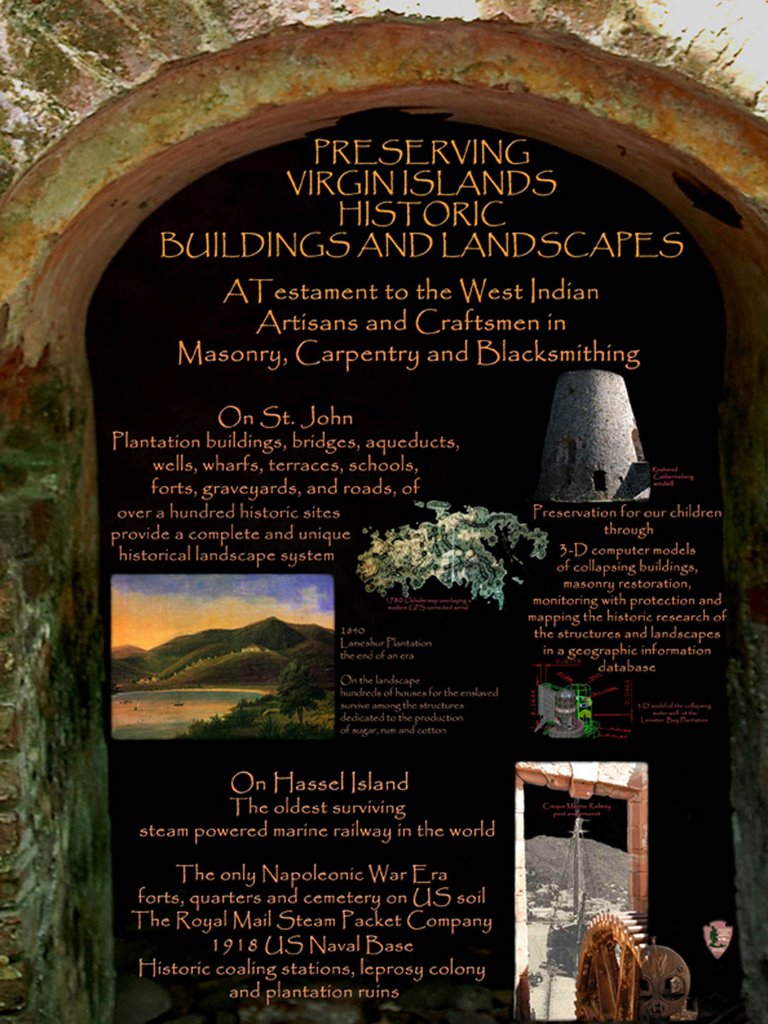
Hello, everyone. It’s an exciting time here at the Virgin Islands National Park. Two interns from the University of Copenhagen have arrived on island, and will be working with the Cultural Resources Management team for the next month. Their names are Laura and Jonas, and both have been researching Lameshur Plantation for the last three months in the Danish National Archives for the beginning of their graduate program. Now, they will be helping to corroborate the written facts they have found with the physical geographical and archeological record on St. John. Already, after having visited Lameshur on Wednesday, Laura and Jonas believe there are more plantations hiding in the bush. Ken has also asked them to attempt to identify the deceased at two different grave sites. It will be a busy month, but the information Laura and Jonas uncover will be invaluable to the history of St. John. They will be giving a talk at VIERS and at the School of the Arts later on in their stay, so anyone interested should stay tuned to learn more.

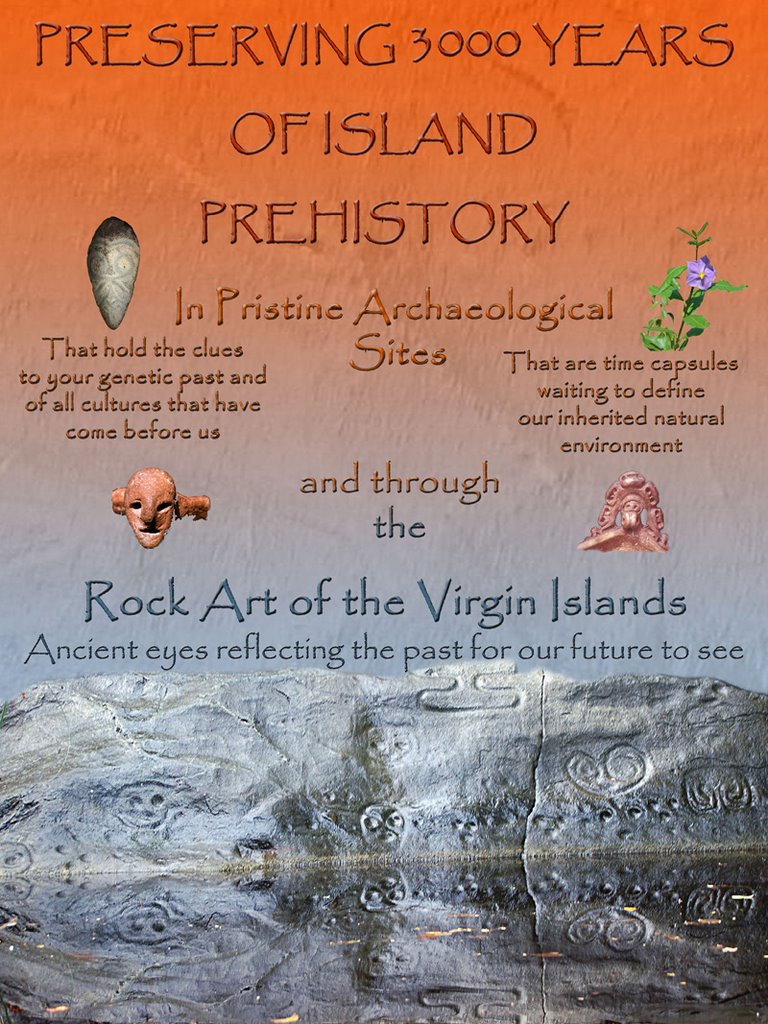
In other news, last week we had a talented artist volunteer to draw several Taino artifacts for us while on vacation in St. John. David Kiphuth, who illustrated Irving Rouse’s The Tainos among many other anthropological books, uses a technique called stippling to sketch artifacts. Essentially, small dots are placed in varying densities to simulate shading and three-dimensionality. The technique is advantageous when illustrating artifacts because stippling can show details that are lost in photographs. Also, color is more expensive to print, so black and white stippling sketches are less costly and more detailed. David’s daughter Ali assisted Susanna and I in the excavation at Cinnamon Bay. While sifting through the fine screen (mosquito mesh), she found a prehistoric, red-colored bead, which is a very rare find. Red, white, and black beads were handmade by the Tainos and used for decoration on their zemi figures. This red bead is the first discovered at Cinnamon Bay. Now we have found all three color types used to make the beaded zemis and a chiefs belt.
 Congratulations Ali on your discovery, and many thanks to Ali and David for your help.
Laura and Jonas will be posting the next blog, so come back soon. Thank you, readers!


 (Mr. Dell, Master Basketmaker)
 (Local Crafts)


 The postcards date from the late 1800 hundreds to the early 1900 hundreds and many of the images captured park resources still in use, like the photograph above with the Reef Bay Factory still in operation.
  Others capture the people and the times like learning to make baskets at the turn of the century. The postcards are great and Jane was so helpful. That day she loaned 100 + cards right then in order for us to scan the images. This week, Susanna spent a few hours scanning in the images, front and back, because the back of the card can indicate when it was published. Eventually, we hope to process all the images and make them available online. Below one of the cards, shows the Creque Marine Slipway in full operation.